A fleet manager in the Chicago suburbs who electrifies twenty delivery vans doesn't just add twenty electric vehicles. They add a new, spiky electrical load to a facility that was never designed for it, and if that load isn't managed carefully, the bill for it can quietly erase most of the fuel savings that justified going electric in the first place. This is where Energy & Sustainability work is quietly shifting in Illinois: away from simply installing chargers, and toward the IoT systems that decide when those chargers actually draw power.
Most of the attention around commercial EV adoption goes to purchase incentives, and Illinois has real money on the table there. ComEd's fleet rebate programs cover $5,000 to $180,000 per vehicle depending on class, and its make-ready infrastructure rebates can cover up to $500,000 of a charging installation. What gets less attention is what happens to the monthly electric bill once those chargers are actually in daily use.
ComEd's commercial demand charges, the fee based on a facility's single highest 15-minute power spike each month, run roughly eight to twenty dollars per kilowatt depending on rate class and time of day. A fleet that lets twenty vans start charging simultaneously the moment drivers return in the evening can easily add 100 kW of unmanaged load, which translates to eight hundred to two thousand dollars in additional demand charges every single month, on top of the electricity itself. That's the cost that smart charging, not the vehicles, is actually designed to control.
A managed charging system sits between the utility meter and the chargers, using real-time data to decide which vehicles charge, and when, without leaving any of them short of a full charge by the next shift.
- Load management: The system automatically caps total fleet charging power to stay under a facility's demand target, spreading vehicles across a longer charging window instead of letting them all draw at once.
- Scheduled and off-peak charging: Charging is shifted to the cheapest, lowest-demand hours of the day, which in Illinois generally means overnight, avoiding the summer afternoon peaks when air conditioning load already stresses the grid.
- Priority sequencing: Vehicles that need to be back on the road soonest get charged first within whatever power budget is available, so load management doesn't come at the cost of missed routes.
- Demand response integration: During grid stress events, the system can pause or throttle charging in exchange for utility payments, turning what used to be a pure cost center into an occasional revenue source.
Fleets that implement this well have cut total charging costs by thirty to sixty percent compared to letting vehicles charge unmanaged, and choosing the right ComEd rate structure on top of that can shave another twenty to forty percent off the bill.
The state's incentive landscape has shifted meaningfully. Federal EV tax credits for commercial vehicles were eliminated for purchases after September 2025, and the federal charging infrastructure credit is set to expire mid-2026, which puts more weight on state and utility programs. ComEd's Beneficial Electrification Plan commits $168 million from 2026 through 2028 specifically to EV incentives, and its 2026 EV rebate round alone made roughly $70 million available across residential, business, and public-sector charging projects. The state has also passed the Clean and Reliable Grid Affordability Act, which directs utilities to build virtual power plant programs that pay customers, including fleet operators, to dispatch batteries and EV chargers as grid resources during peak periods.
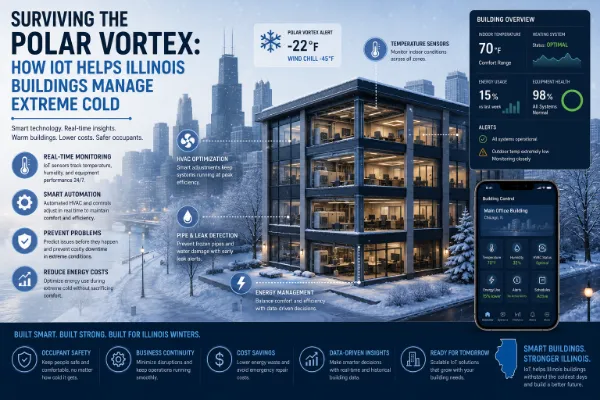
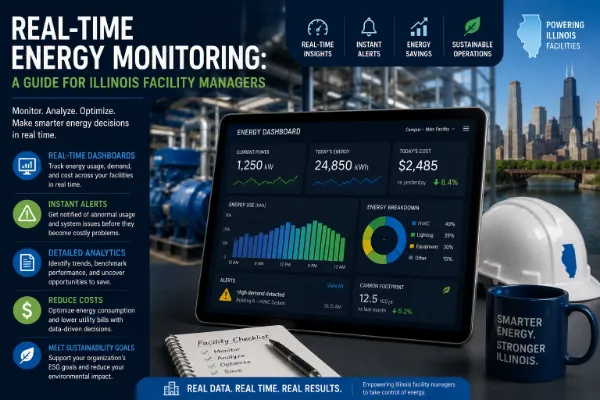
That last piece matters more than it sounds. It means a well-instrumented Illinois fleet isn't just avoiding demand charges anymore; it's becoming eligible to get paid by ComEd for the same load-shifting behavior that lowers its own bill, the same dynamic explored in this guide to real-time energy monitoring for facility managers.
Consider a regional delivery operator in the Chicago suburbs running thirty vans out of a single depot. Without load management, all thirty vehicles plugging in around the same evening return window could push the facility into a new, expensive demand tier overnight. With a managed charging system layered on top of the same chargers, the fleet spreads that load across six to eight hours, prioritizes the vans scheduled for the earliest morning routes, and shifts as much charging as possible into ComEd's lowest-cost overnight window. The chargers and vehicles don't change. The IoT layer managing when they draw power is what determines whether electrification saves money or quietly adds a new fixed cost.
Many fleets budget for energy costs per mile and completely miss demand charges until the first post-electrification bill arrives. Modeling demand charge exposure before installing chargers, not after, avoids an expensive surprise.
ComEd and other Illinois utilities offer multiple commercial rate structures with meaningfully different implications for EV charging costs, and choosing the wrong one can offset most of the savings a managed charging system otherwise delivers. This is worth working through with a utility account representative before finalizing infrastructure design.
Older commercial buildings and depots often need electrical service upgrades to support even a modest fleet charging load, and those upgrade costs need to be weighed against make-ready rebate availability before committing to a charger count.
Expect vehicle-to-grid and virtual power plant participation to become a standard line item in fleet electrification planning, not a future experiment, as ComEd's VPP programs scale under the new state mandate. Expect utilities to keep piloting creative demand-response ideas, including exploring whether electric school buses can help absorb summer grid stress while school is out of session. And expect facility-level battery storage to pair increasingly with fleet charging systems, an approach already gaining traction in solar and battery optimization against Illinois utility rates, letting operators buy cheap overnight power, store it, and avoid demand charges entirely regardless of when vehicles actually plug in.
Browse more Energy & Sustainability and Smart Utilities coverage for related grid and infrastructure reporting.
Frequently asked questions
Demand charges. ComEd charges based on a facility's highest 15-minute power spike each month, and unmanaged simultaneous charging across a fleet can add hundreds to thousands of dollars monthly beyond the electricity cost itself.
Well-implemented smart charging has reduced total fleet charging costs by thirty to sixty percent compared to unmanaged charging, with rate structure optimization adding further savings on top.
ComEd's Beneficial Electrification Plan 2 provides $168 million from 2026 through 2028 for EV incentives, including per-vehicle rebates up to $180,000 and make-ready infrastructure rebates up to $500,000 per project.
Yes, increasingly. Illinois's Clean and Reliable Grid Affordability Act requires utilities to build virtual power plant programs that pay customers, including fleets, to dispatch EV chargers and batteries as grid resources during peak demand events.
Federal commercial vehicle tax credits ended for purchases after September 2025, and the federal charging infrastructure tax credit expires June 30, 2026, shifting most of the available incentive value to Illinois state and ComEd programs.
Even a handful of vehicles charging simultaneously can push a facility into a new demand tier, so load management is worth evaluating for any commercial fleet, though the dollar savings scale with fleet size and facility load.
Related articles

 Energy & Sustainability